News and Announcements
Post-Op Hip Arthroscopy Physical Therapy: The 3 Stages of Recovery
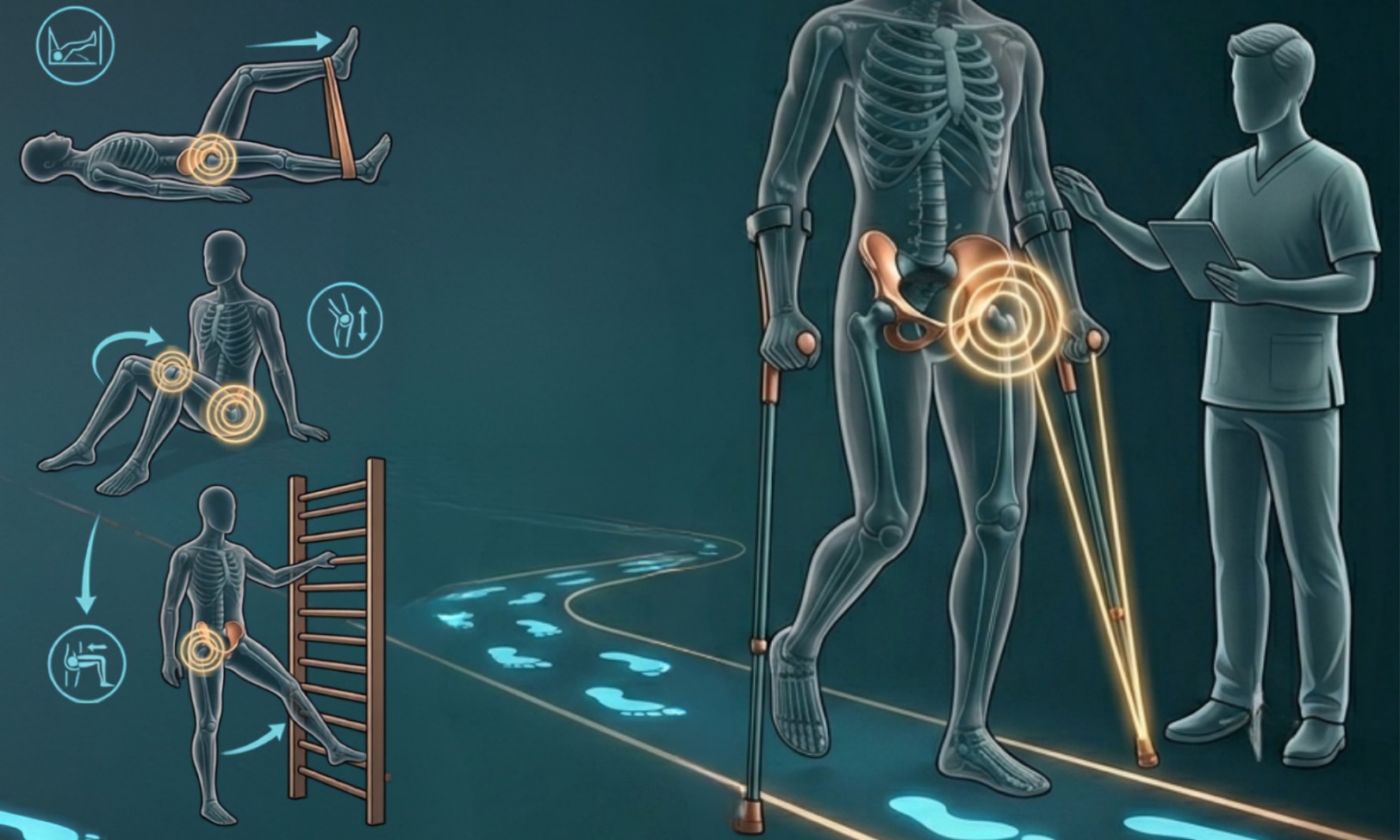
If hip arthroscopy surgery forms the foundation for the anatomical correction of the joint, specialized hip physical therapy is the essential process that will ensure the patient’s full functional integration. Based on his extensive clinical experience and international expertise, orthopedic surgeon Dr. Tzaveas has designed a model postoperative physical therapy protocol.
This protocol is not a general or standardized treatment plan. Instead, it is strictly and individually tailored to each patient, in direct relation to exactly what was performed during surgery. The extent of the osteoplasty (removal of femoroacetabular impingement), the number of anchors used to repair the acetabular labrum, and whether chondroplasty was performed, precisely determine the intensity, range of motion, and weight-bearing schedule in each phase of rehabilitation.
The primary goal of the treatment plan is threefold:
-
Prevention of Intra-articular Adhesions: Avoiding the formation of fibrous tissue (internal scars) that can restrict mobility.
-
Restoring Range of Motion: The progressive and safe restoration of the joint's path of motion in all planes.
-
Dynamic Stabilization of the Pelvis: Neuromuscular re-education of the stabilizing muscles to ensure proper biomechanics.
Below are the three main phases of the postoperative rehabilitation protocol, as applied in clinical practice:
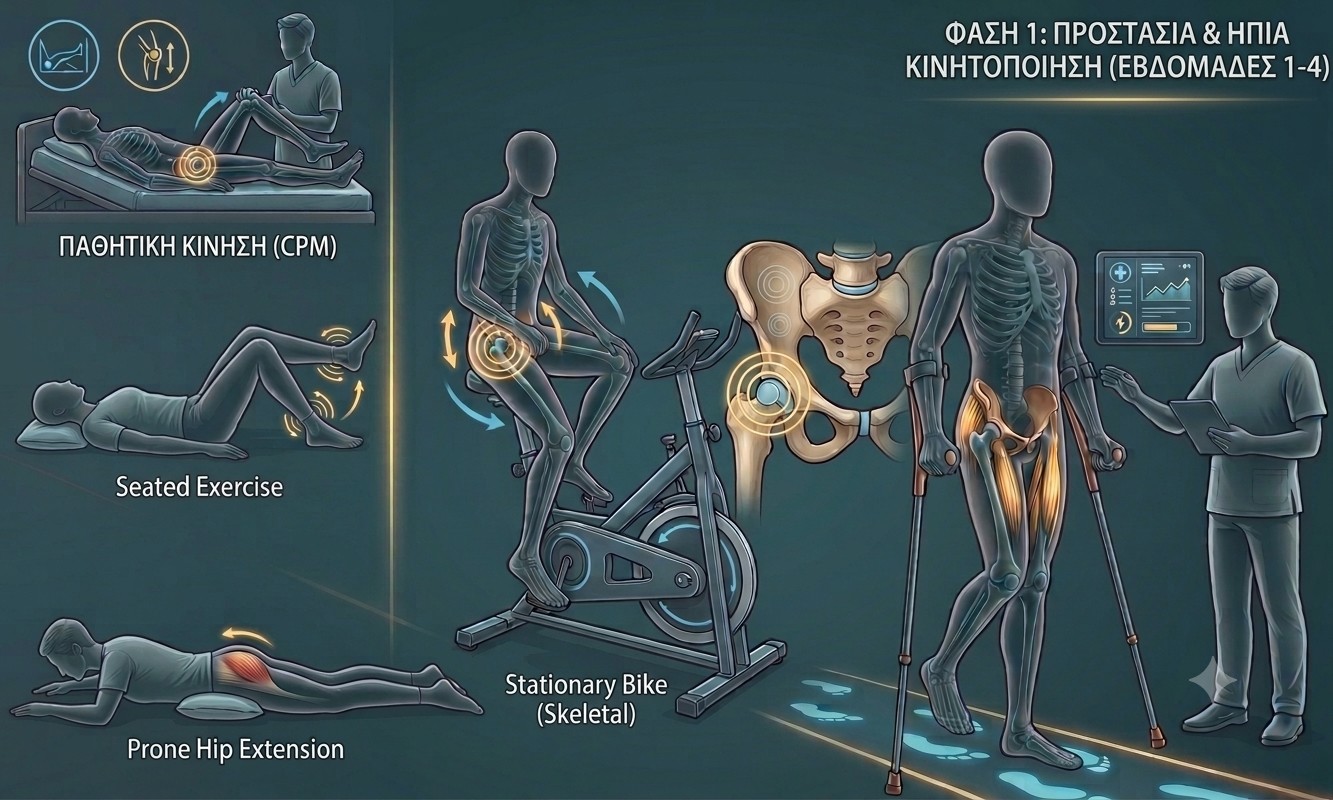
Phase 1 (Weeks 1-4): Protection & Gentle Mobilization
During the initial postoperative phase, the reconstructed tissue (such as the repaired labrum) is in a stage of cellular organization and remains highly vulnerable to mechanical stress. For this reason, the exercises are strictly passive or assisted and are performed under conditions of complete joint unloading, protecting the surgical correction and preventing the formation of intra-articular adhesions.
-
Main Goals: Reduction of postoperative pain, protection of the repair, and prevention of stiffness.
-
Core Exercises:
-
Continuous Passive Motion (CPM): The physical therapist gently moves the patient's leg within safe limits, without activating the hip muscles.
-
Stationary Bicycle: Starting from the very first days. It is done with zero resistance and with the saddle positioned high, to avoid flexing the hip beyond 90 degrees. This helps the proper circulation of synovial fluid and prevents the formation of adhesions.
-
Isometric Exercises: These are controlled muscle contractions of the glutes and quadriceps without changing muscle length or moving the joint. Their early application is crucial for neuromuscular activation, preventing muscle atrophy, and maintaining motor control in the initial stages after hip arthroscopy.
-
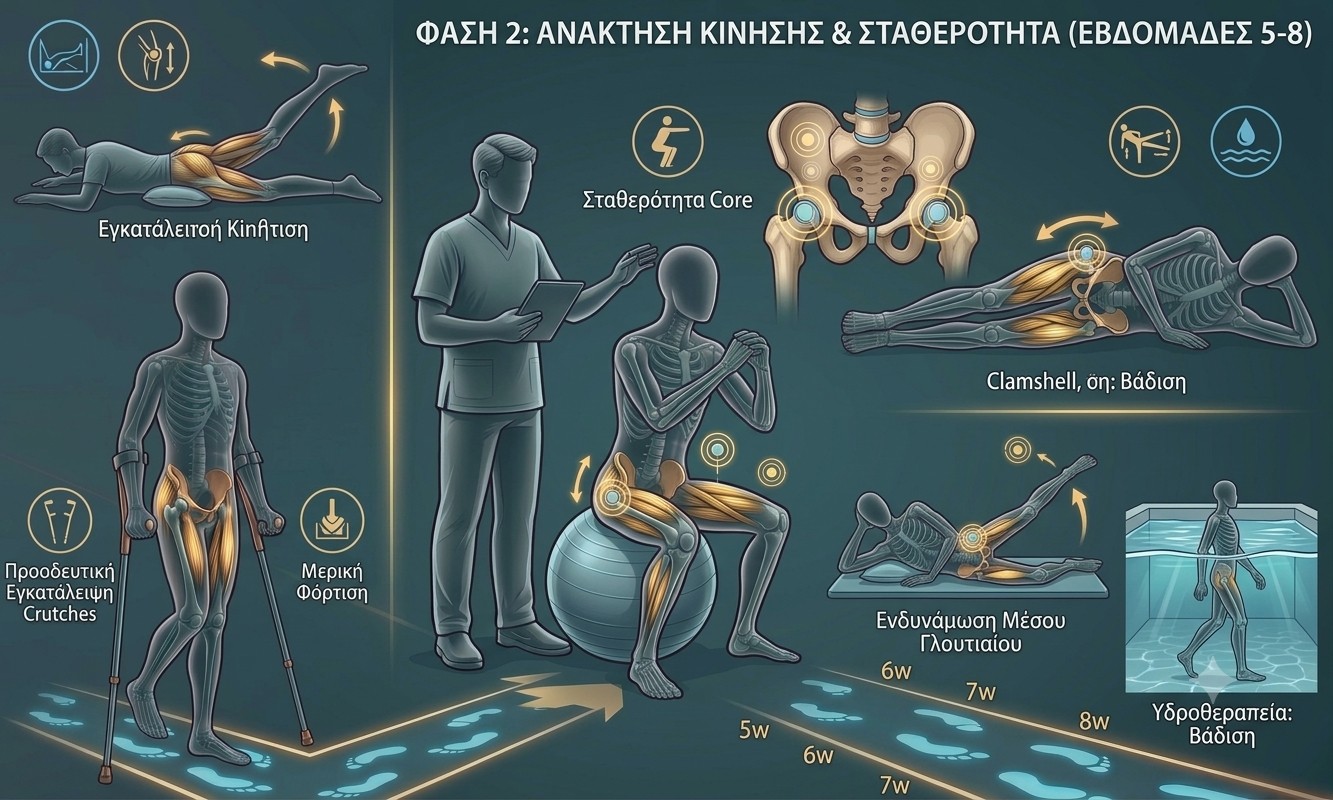
Phase 2 (Weeks 5-8): Restoring Motion & Stability
After the first month, the tissues have acquired their first significant strength. The patient progressively abandons crutches and the hip begins to bear the full weight of the body.
-
Main Goals: Full range of motion, re-education of proper gait (without limping), and initiation of active strengthening.
-
Core Exercises:
-
Standing Exercises: Gentle supported squats, glute bridges, and single-leg balance exercises (proprioception).
-
Strengthening the Rotators and Abductors (Gluteus Medius): This specific muscle group is the primary dynamic stabilizer of the joint. Targeted strengthening of the gluteus medius and external rotators ensures the anatomical stability of the pelvis during the stance phase of walking, preventing compensatory loads on the lumbar spine and the operated hip.
-
Hydrotherapy: Utilizing the buoyancy of water allows for progressive loading of the limb in a reduced-gravity environment, eliminating impact stresses. Walking and specialized gentle exercises in the water offer optimal muscle activation, improve range of motion, and contribute decisively to the safe rehabilitation of the hip.
-
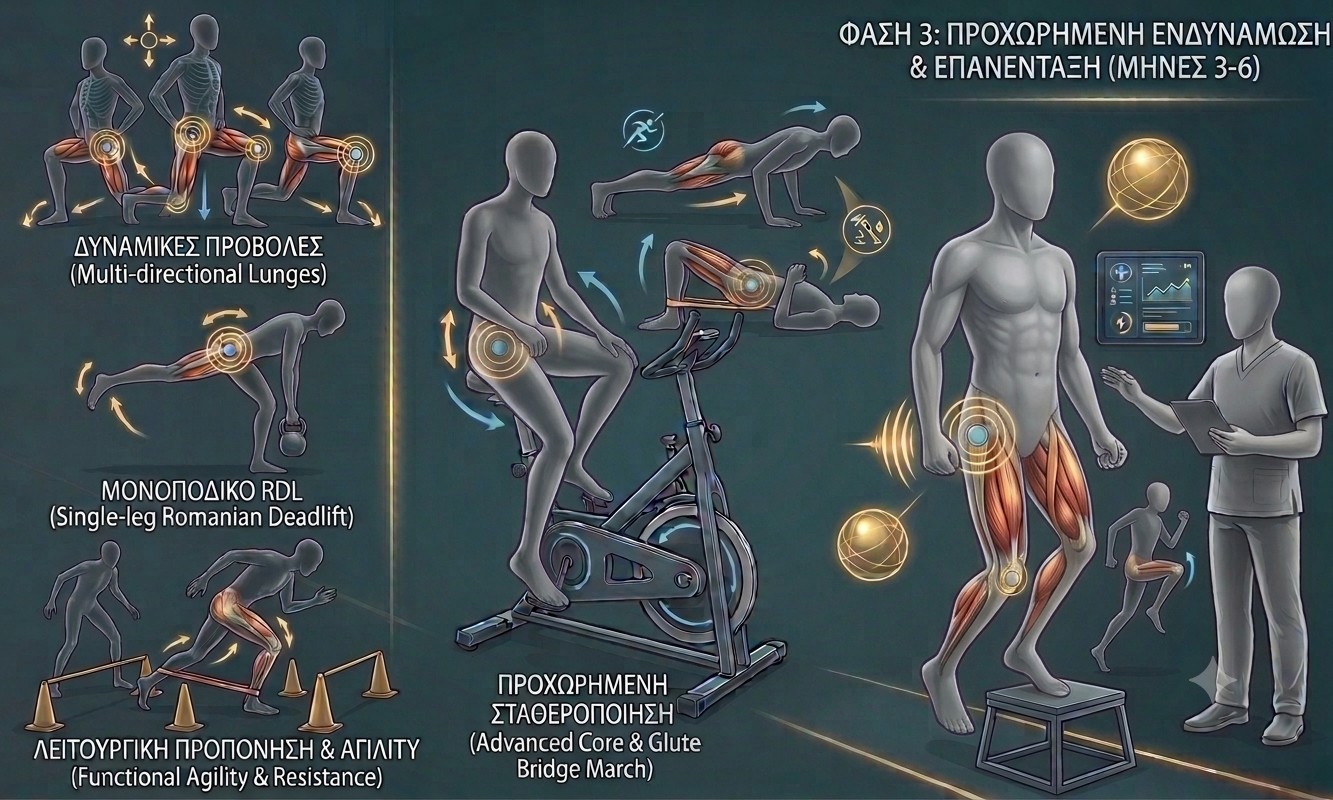
Phase 3 (Months 3-6): Advanced Strengthening & Return to Sports
This is the phase of "action". It involves fully preparing the body for the demands of daily life and, most importantly, athletic activity.
-
Main Goals: Muscle strength, endurance, power, and a safe return to sports activities.
-
Core Exercises:
-
Functional Training: Lunges in all directions, deeper squats, and resistance band exercises.
-
Plyometric Exercises & Direction Changes: Upon completion of the 4th postoperative month and following clinical evaluation by the surgeon, the patient enters the advanced reintegration phase. At this stage, the therapeutic protocol is upgraded with the introduction of low-impact plyometric exercises (light jumps), controlled straight-line jogging, and, progressively, dynamic rotational movements. This transition always takes place provided that the joint presents full functional stability and absence of symptoms.
-
Specialized Real-Sport Simulation: Exercises are tailored to the patient’s specific sport (e.g., specific movement drills for tennis, soccer, or dance).
-
Conclusion
The success of postoperative rehabilitation is based on the patient's systematic consistency and continuous communication within the therapeutic team. The specialized hip physical therapy protocol must be applied with absolute respect for the biological healing times of the tissues, as premature loading to accelerate the process carries the risk of causing reactive synovitis or joint irritation. When the specialized surgical approach is combined with a disciplined physical therapy program, the outcome of hip arthroscopy is the complete elimination of pain, the restoration of muscle power, and a safe return to every level of activity.