News and Announcements
Postoperative rehabilitation after Hip Arthroscopy: A guide for the first weeks at home
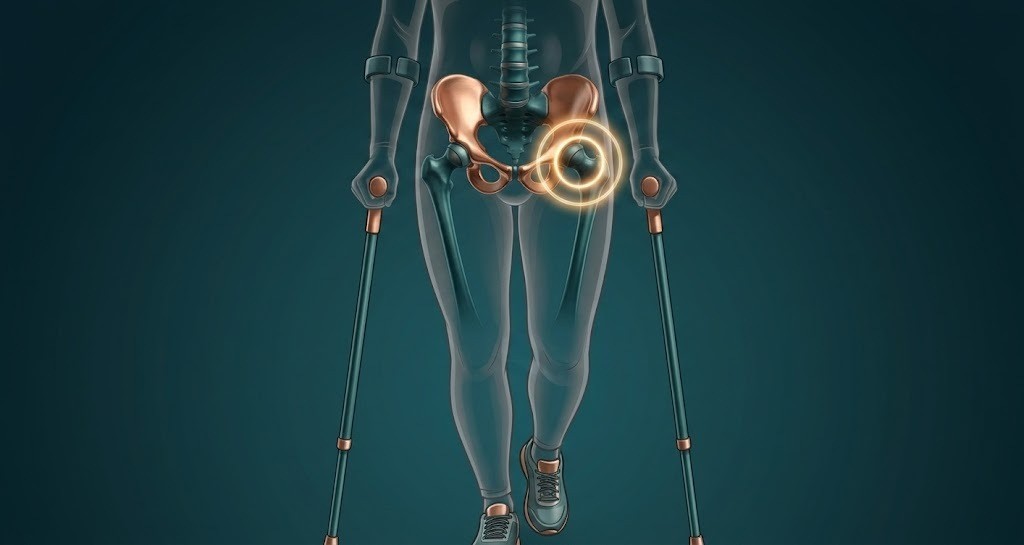
Postoperative Patient Care & Recovery Protocol After Hip Arthroscopy
Same-day discharge (One Day Clinic) or next-day release is a primary advantage of modern hip arthroscopy. Returning home marks the beginning of a crucial recovery phase where protecting the joint is the primary objective. Surgical success depends significantly on patient compliance during the first few weeks.
Below is a practical guide detailing the core post-operative recovery principles:
1. Weight-Bearing Management & Crutch Usage Crutches are required for 4 to 6 weeks to allow repaired intra-articular tissues (especially anchor-repaired labral tears) to heal safely.
-
Partial Weight-Bearing: Your surgeon will determine the exact percentage of body weight allowed on the operated leg (typically starting at 15–20%). Crutches prevent excessive joint loading during ambulation.
-
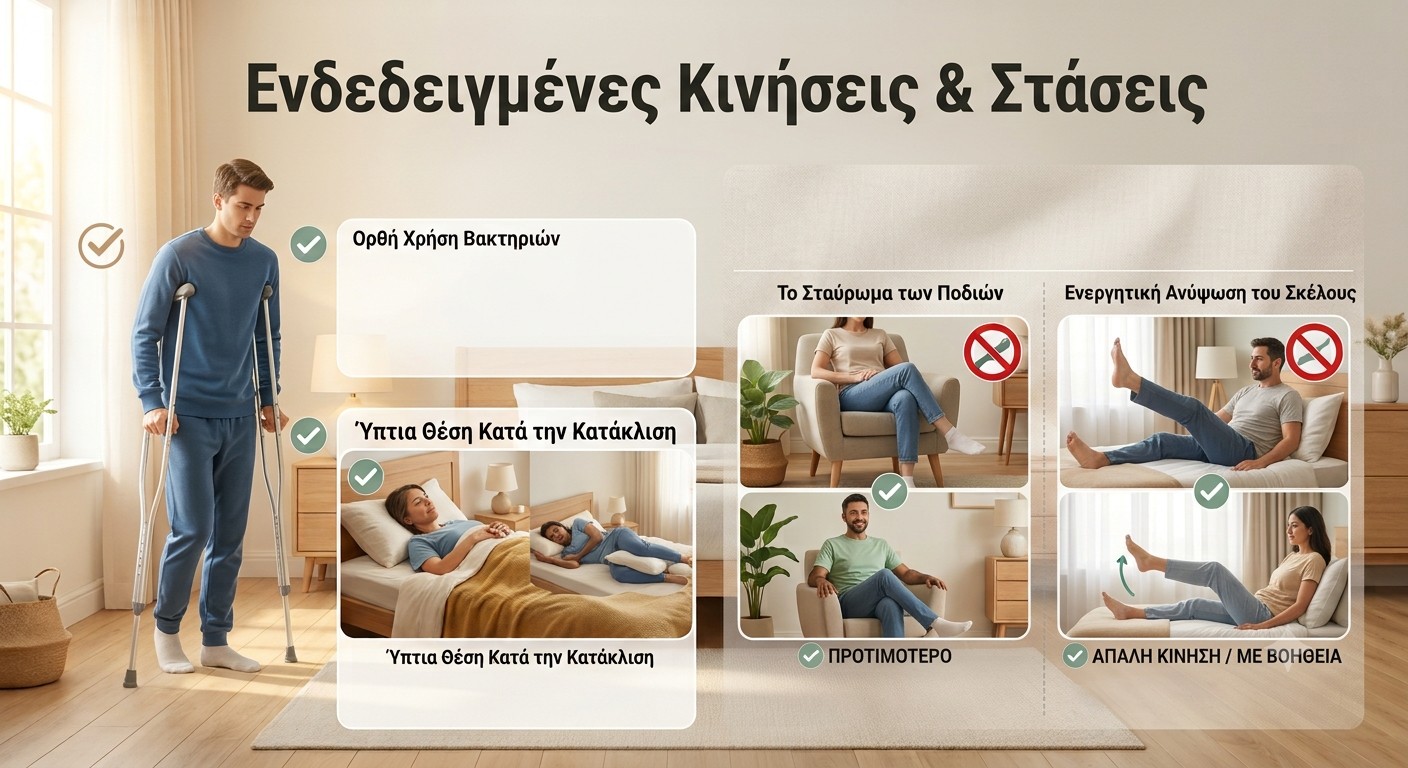
Proper Fitting: Ensure crutches are adjusted to your height. Weight should be supported through your hands rather than your armpits, keeping the torso upright in a natural posture.
2. Surgical Wound Care & Hygiene The procedure is performed through 2 or 3 micro-portals, typically closed with 1–2 sutures each and covered with waterproof dressings.
-
Cleanliness: Keep incisions clean and dry. Change dressings strictly according to your surgical team's protocol.
-
Showering: Showering is generally permitted after the first few days if waterproof dressings are used. Avoid direct high-pressure water stream on the incisions. Submerging the wounds (baths, swimming) is strictly prohibited until suture removal (approx. 10–14 days post-op).
3. Pain Management & Thromboembolism Prophylaxis Postoperative pain is typically mild and manageable due to the procedure's minimally invasive nature.
-
Medication: Analgesics or anti-inflammatories are prescribed for the first few days. Strict adherence to prescribed anticoagulant therapy is crucial to prevent deep vein thrombosis (DVT) during the period of reduced mobility.
4. Joint Protection Guidelines
Recommended Movement & Posture:
-
Correct Crutch Technique: Maintain partial weight-bearing by transferring weight through the handles, keeping your spine and pelvis properly aligned.
-
Supine Sleeping Position: Sleeping flat on your back is optimal. If turning onto your non-operated side, place 1 or 2 pillows between your legs to keep the operated hip stable and neutral.
Movement Restrictions:
-
Crossing Legs: Avoid sitting with crossed legs. Keep feet parallel or shoulder-width apart to prevent unwanted stress on the joint capsule.
-
Active Straight Leg Raises: Avoid unassisted lifting of the operated leg straight up off the bed or holding it in the air. Support the leg manually or move it gently without forced muscular contraction.
Surgical execution is only half the process; post-operative joint stewardship ensures long-term functional success. Recovery protocols are tailored to the specific anatomical repairs performed.
Contact Us Today!
Every patient presents a unique anatomical and clinical profile, making the recovery protocol after hip arthroscopy fully individualized depending on the type and extent of the intra-articular pathology repaired.
If you are scheduling your surgery or are already in the postoperative recovery phase and would like further clarifications, orthopedic surgeon Dr. Tzaveas and his specialized scientific team in Athens and Thessaloniki are at your disposal to provide expert guidance.