
News and Announcements
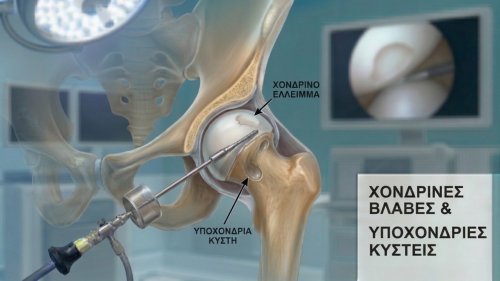
Chondral Lesions & Subchondral Cysts in the Hip: Diagnosis & Arthroscopic Management
Stress on the articular cartilage and the underlying bone of the hip is often the result of untreated Femoroacetabular Impingement (FAI) or a labral tear. This article explores the mechanisms behind chondral defects and subchondral cysts, the diagnostic pathway using high-resolution Magnetic Resonance Imaging (MRI), and the pivotal role of Hip Arthroscopy. Modern techniques such as chondroplasty, bone marrow stimulation, and biological augmentation are highlighted, all aimed at restoring joint anatomy and ensuring long-term Joint Preservation.
Read more >>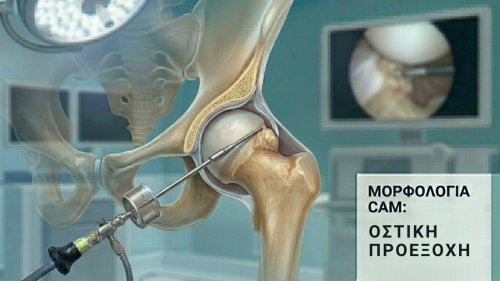
Femoroacetabular Impingement (FAI): Cam vs Pincer – The Primary Cause of Hip Pain in Active Young Adults
Persistent hip pain in young and active adults is often an indicator of Femoroacetabular Impingement (FAI) — an anatomical condition causing mechanical friction and gradual stress on the joint. This article examines the different types of FAI, its key symptoms, and the critical role of Hip Arthroscopy in restoring joint anatomy and ensuring long-term hip preservation.
Read more >>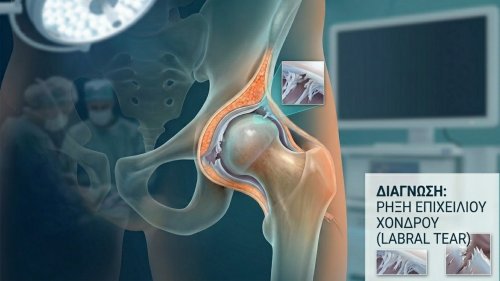

The Day of Surgery: What to expect during Hip Arthroscopy & the One Day Clinic experience
Learn in detail what happens on the day of your Hip Arthroscopy. Discover the preparation process, the surgical repair of labral tears and FAI, as well as the benefits of One Day Clinic hospitalization for a fast and safe return home.
Read more >>
Before Hip Arthroscopy: Recognizing Symptoms of Hip & Groin Pain (Causes & Diagnosis)
Hip pain in young and athletic individuals is often mistaken for simple muscle strains, whereas in reality, it may conceal intra-articular pathology such as femoroacetabular impingement (FAI), acetabular labral tears, or other anatomical deformities (e.g., hip dysplasia).
If you experience deep groin pain (the characteristic "C-sign"), discomfort during deep squats, or clicking and locking sensations, early diagnosis is crucial. Modern orthopedics focuses on Joint Preservation—through minimally invasive techniques such as hip arthroscopy—preventing premature wear and osteoarthritis.
Read the full article to learn how to recognize the symptoms and discover the appropriate treatment options.

Post-Op Hip Arthroscopy Physical Therapy: The 3 Stages of Recovery
The success of hip arthroscopy is completed through specialized and individualized physical therapy. Orthopedic Surgeon Dr. Tzaveas has designed a model post-operative protocol, which is fully tailored to the unique aspects of each patient's surgery (extent of osteoplasty, labral repair, etc.).
Absolute respect for the biological healing time of the tissues and close cooperation between the patient, surgeon, and physical therapist are essential to avoid irritation (such as synovitis) and to ensure a complete, pain-free return to daily and athletic activities.

Postoperative rehabilitation after Hip Arthroscopy: A guide for the first weeks at home
The success of a hip procedure in Athens & Thessaloniki is completed with proper and protected rehabilitation. In this guide, Dr. Tzaveas breaks down step-by-step everything you need to know about safe mobility with crutches, essential movement restrictions to protect the joint, as well as proper incision care.
Read more >>
Indications for Hip Arthroscopy: Which conditions are treated arthroscopically and when is the procedure selected?
Hip arthroscopy represents the leading minimally invasive method for the etiologic treatment of joint conditions. The article presents the primary clinical indications and analyzes the 6 most common pathologies—ranging from femoroacetabular impingement (FAI) and labral tears to synovial chondromatosis and chronic synovitis—that are definitively treated with arthroscopic repair.
Read more >>
Hip Arthroscopy: The Ultimate Patient Guide – Answers to All Key Questions
A scientific reference guide providing structured answers to the most crucial questions regarding the intraoperative and postoperative management of hip arthroscopy. Through specific answers, modern joint preservation techniques are analyzed.
Read more >>
Case of a 52-year-old patient with advanced secondary osteoarthritis of the left hip, following childhood trauma, treated with Mako robot-assisted total hip arthroplasty
Robotically assisted hip arthroplasty in a technically demanding procedure, due to joint deformity and the need for precise restoration of normal anatomy!
Read more >>


